

In December, local volunteers and Staffordshire Wildlife Trust staff cleared the seating area adjacent to the River Churnet in the Sainsbury’s Nature Area. SWT warden Ros has suggested forming a Friends of Sainsbury’s Pools group – an initiative we are keen to support.
There have been very few iNaturalist surveys recorded around these pools. Members are encouraged to visit this diverse habitat and send in their findings. Nature in Your Neighbourhood will be running an iNaturalist training session if you are unsure how to use the App.
Penny and Jane took part in the annual BSBI New Year Plant Hunt and found 12 native flowering plants, considerably better than our scores in 2023 and 2024, when we found three each year!
In news from the NIYN project, Penny has just run a coppicing workshop at Ladderedge Country Park. This is a busy time of year for tree planting and there are opportunities to sign up for a session with the Dane Valley Climate Action Group or with the Manifold CAN group. As usual, the local SWT groups at Rod Wood and Swineholes Reserve always welcome new volunteers.
Finally, we were thrilled that the initiative to wake up the apple trees in two of the community orchards that we manage went off so well. The full details are covered in our Spotlight article.
Leek is lucky to have no less than five community orchards across the town but, while the trees are now thriving, there is still limited public awareness of their existence.
The young fruit trees were planted, with care, by council contractors during the lockdown in January 2021, mostly on areas of land surrounded by residential housing. There was, however, no plan for future management or community engagement and the trees were effectively left to their own devices for the first few years.
Moorlands Climate Action stepped in, offering to take over the management of the orchards from 2024 onwards. The district new council agreed, and MCA volunteers now regularly maintain the trees. The January 2026 Wassailing event, organised by MCA, was designed to stimulate wider community involvement – including alerting residents to the fact that their local orchards yield free fruit just a short stroll away.
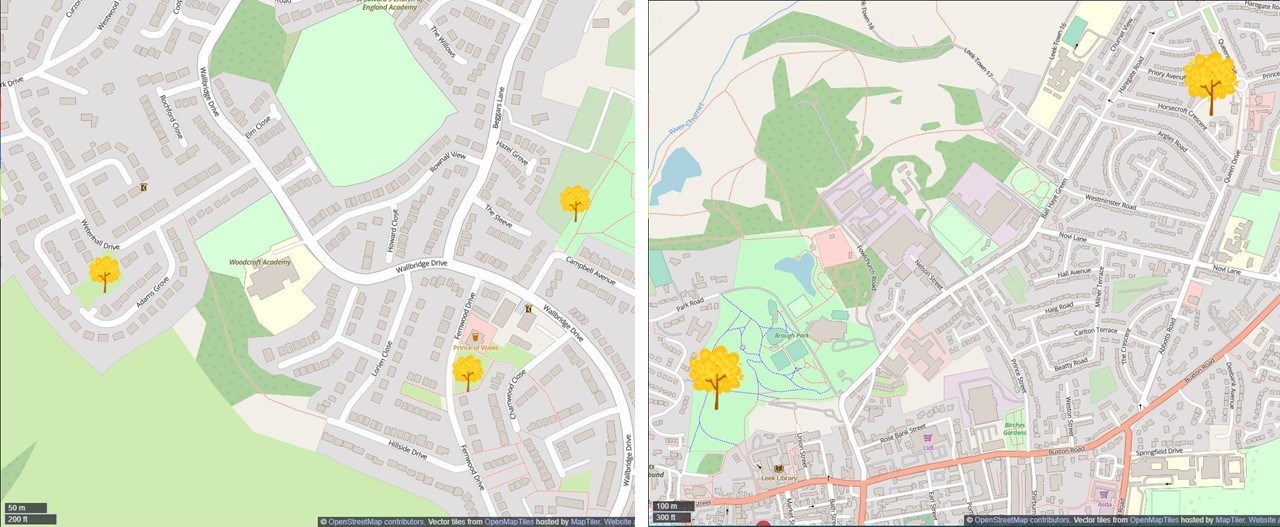
The location of the five orchards is shown on the maps above. Three are in the West End of Leek, one is at the top of Brough Park and another by Haregate Community Centre. Each orchard has a mixture of plum, apple, crab apple, pear and hazel trees.
During the first spring that MCA looked after the orchards, each tree was given a 60cm cardboard mulch mat covered with bark chippings to prevent grass and weed growth around the trunk - and to protect the tree bark from contractors’ strimmers!
The future yearly plan for the orchards is:

Nature in Your Neighbourhood is halfway through its second year, and MCA members were once again heavily involved in the next phases of the National Lottery-funded project.
Baseline surveys for most of the sites were completed earlier in the year and now the focus has moved on to one or more seasonal surveys. Once again members were on hand with their quadrats, field guides and general enthusiasm to observe and record what the sites had to offer during the late summer and early autumn period.
Completed in partnership with Staffordshire Wildlife Trust, Keele University and members of the local groups affiliated to the sites, these surveys form a key part of understanding how each site changes as the year moves through its seasonal cycle. Members were keen to build on their surveying skills and knowledge, whilst enjoying the vagaries of the British Summer!
But as always, the sun shone on Haregate when Swifts of Leek members did their surveys on the junction site near the bottom end of Carlton Terrace. Because this site is on land managed by the county council and is highly visible to residents, it brings its own issues. But local people have been enthusiastic about what we aim to do - even lending a hand with the surveys - and it was always a priority to have at least one of the project sites in an urban setting.
In our last issue we reported on the Water Blitz monitoring done in the Moorlands in April, including the contributions of several of our members. Across the UK, thousands of citizen scientists uploaded data in 4,017 surveys, 3,279 of which were collected in England. Sadly, the data indicate that England has the worst water quality in the UK, which is consistent with the findings of the Great UK Water Blitz events from June and September 2024.
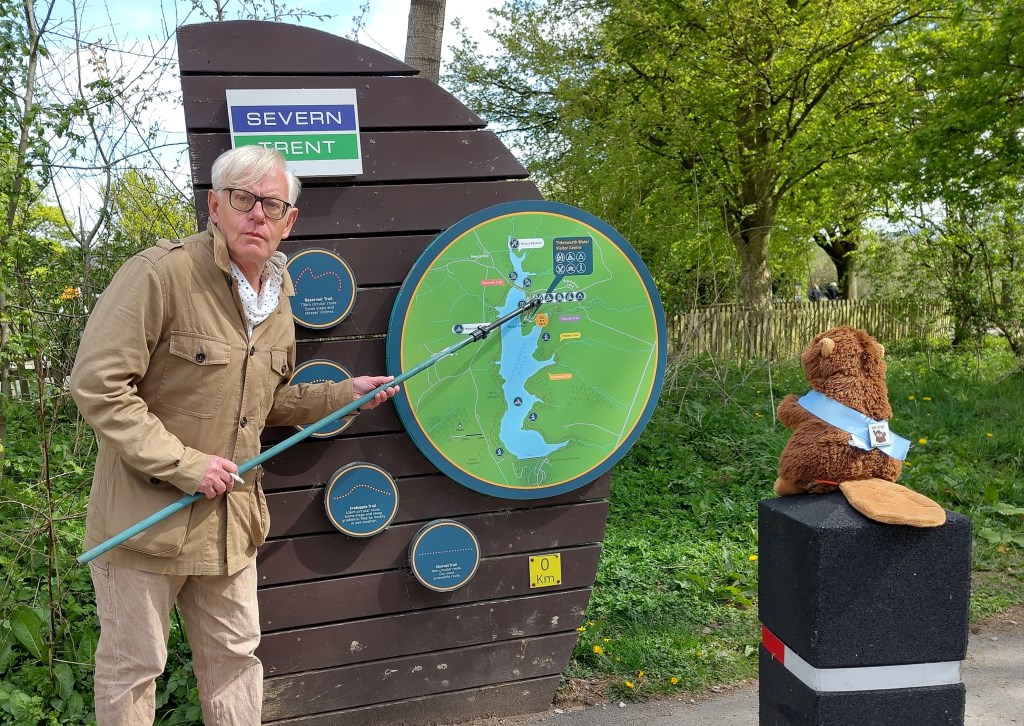
Clearly, ongoing monitoring is vital and we in MCA believe it’s important to help maintain the impetus and help keep the issue in the public eye. We’ve been asked to return in September to the same locations, so that they can be monitored consistently over a period of time. Given that we all enjoyed the process in April, we are definitely keen to return and maybe recruit more volunteers. Baldrik, our beaver mascot, particularly enjoyed his time on the Churnet, although he's not convinced he learned much from the induction session provided by MCA member Mark Johnson.
You can find more information about the Great UK Water Blitz on their website, where you can also register to get a testing kit for this September (19-22). Registration is essential if you want to have your own testing kit. There’s a limited number of kits available and so far more than 4000 have already been allocated out of 6500. You can register an interest independently of MCA but we would prefer to coordinate our approach, so do let us know if you would like to join us via
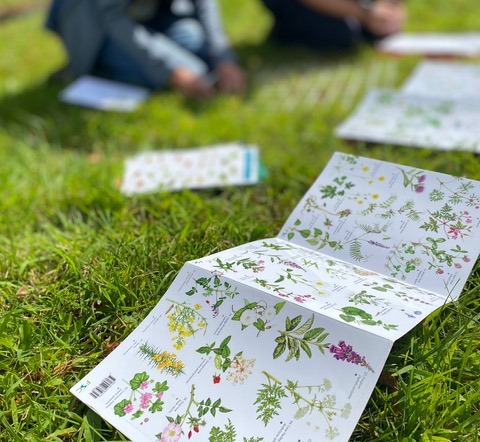
The Nature in Your Neighbourhood project moved into its second year in April; Moorlands Climate Action volunteers got their hands dirty and started sampling on site – and they loved it! After a year of preparation and publicising the project, there was a real feel of beginning to do what our members love best – improving nature in their neighbourhood. For a very few volunteers it meant brushing up on old skills. “I haven’t handled a quadrat for years and it was nice to get back to something I really enjoyed doing,” said one. “Particularly as I was doing it on land I pass often, just round the corner from my house!”
But for most, learning how to survey and record was brand new. “I’m an amateur gardener but I love this, it’s really different,” was the verdict of another volunteer. “It’s amazing what you see when you have to get up real close and make sure you don’t miss anything.” Those who participated in more than one survey found the ability to compare conditions particularly instructive, for example soil quality and water retention.
One common theme was that learning together was actually fun – people could laugh at small mistakes in site drawings or identifying the wrong plant. This sense of team effort was amplified by the reaction of passers-by and, for the urban sites such as the Haregate estate, immediate neighbours. Dog walkers stopped to chat about what we were doing and residents even started talking about what they were doing in their own gardens and asking for advice! In the urban examples it was heartening to attract a small number of volunteers from outside the group (and outside the normal demographic). In one case a young girl was brought to look at the survey by a local friend of an MCA member and ended up staying the afternoon to take a full part in it.
In our last issue we wrote about the problem of water pollution in the Moorlands, as well as in the rest of the UK, and also about how we can participate as citizen scientists, in helping to monitor water quality in our own localities.
We encouraged our supporters to take part in the Great UK Water Blitz, which runs entry-level monitoring sessions twice a year, in April and September. This April, we and other community groups in the Moorlands registered with the organisers, received our testing kits and sallied forth to key stretches of water that we thought were worth monitoring. We aimed as much as possible to avoid duplicating the efforts of others but also to see if we could detect different levels of pollution at different stretches of the same river (for example above and below sewage outflows and the like).
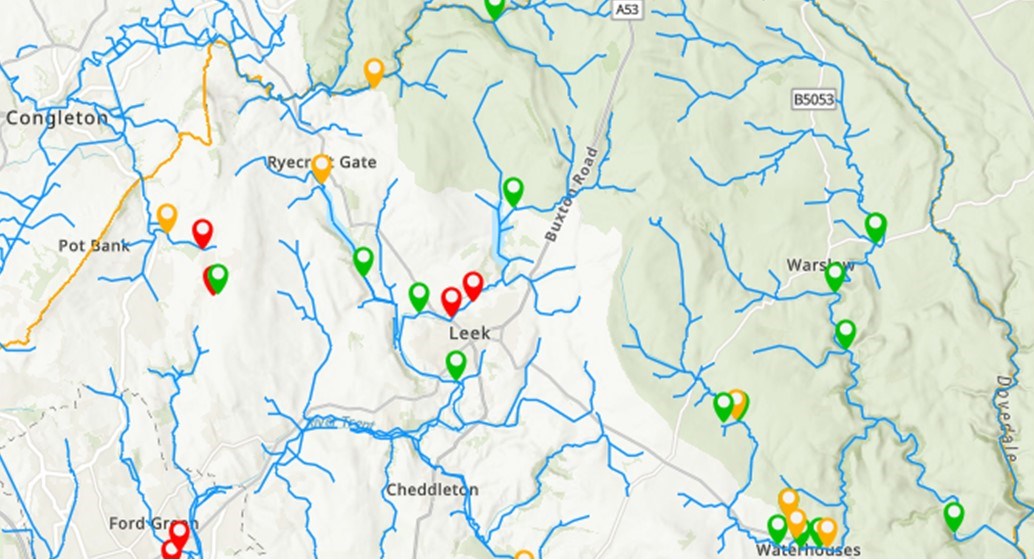
Our results and those of others can be seen in the map above. The green pins represent good water quality, amber moderate quality and red poor quality. For full details and the results of the nitrate and phosphate tests, you can go to the interactive map of the Water Blitz’s results page and click on the pin for each location. You can also download and read the full report, which shows how our area performs compared to others.
We’ve been asked to return in September to the same locations, so that they can be monitored consistently over a period of time. Let us know if you would like to join us via
- Nature in Your Neighbourhood – Baseline Surveys Started
- Local Citizen Science Action for Water
- Natural Flood Management
- Farm Carbon Toolkit
- Nature in Your Neighbourhood - At HUG
- Nature Trails and Pesticides
- A Spring in Our Steps
- Nature in Your Neighbourhood - Our New Biodiversity Officer
- Beavers, Bugs and Biodiversity Net Gain
- Family Fun Day at Tittesworth
- Opportunity for a Local Community Nature Trail
- First Swift of Summer Competition